Home Page All About Wales Podcast Food Bibliography
There are three
distinct traditions in Wales: the Eisteddfod, the Noson Lawen and the
Cymanfa Ganu.
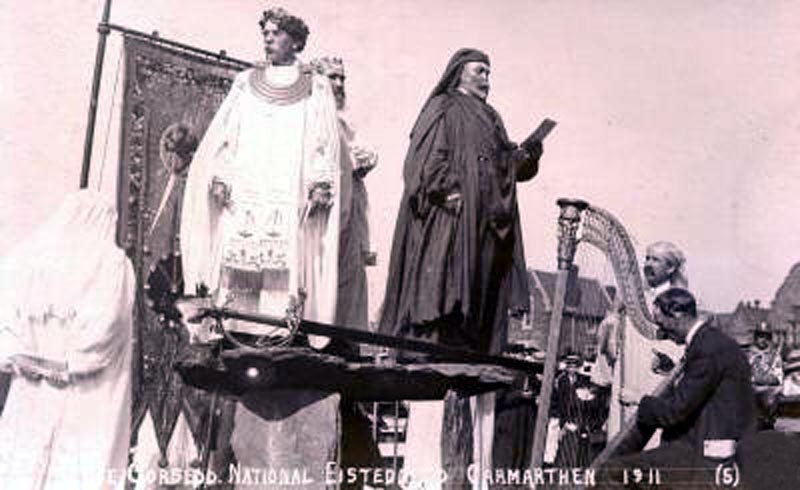


Eisteddfod
The Eisteddfod is probably the most ancient and the
most
popular. Most towns and villages conduct an annual Eisteddfod in one
way or another. Eisteddfod is a competition. The translation of
Eisteddfod is "charing". The winner is awarded by a chair and he
is awarded with great praise.
Noson
Lawen
The
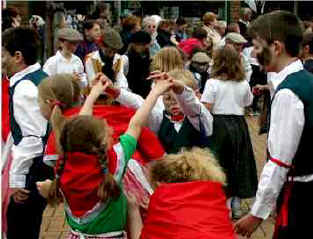
Noson Lawen was held to celebrate the
successful bringing in of the hay harvest, always a big event because
they didn't know what the weather was going to be like. Because corn
does not grow in Wales, a good hay crop is needed for winter feed for
the cattle and horses. The festivities included reciting of verses
(which is called penillion) to the sound of the harp and dancing. A lot
of cider and ale is consumed but these are not needed for a Noson
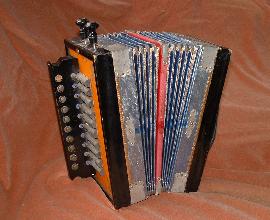
Lawen. Music plays a large part of the Noson Lawen. Key elements in the
activities are playing the harp and reciting verses. The Noson Lawen
gives everyone a chance to show their talents.
Cymanfa Ganu
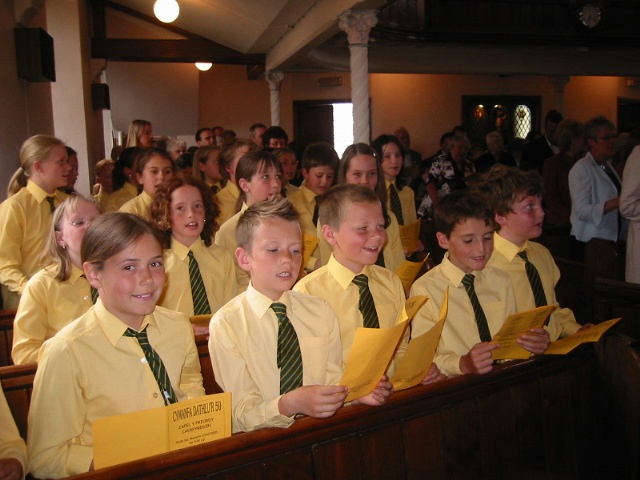
The Cymanfa Ganu is emphasised on hymn singing and is not a very
ancient event at all. It came in the mid-nineteenth century.
Water was unsafe to drink and beer was drunk in huge quantities,
because of the unsanitary conditions in the rapidly-growing and
hurriedly-thrown together housing developments. This happened because
of the industrialization that was rapidly changing the valleys.
Inspired by the success of the day's events, the Gwent and Glamorgan
Temperance Movement decided to hold an annual festival of choirs and at
the Eisteddfod at Aberdare of 1846. It has remained ever since as one
of the most popular and best attended events. Many hymns have been
written especially for the Cymanfa. In the chapels of Wales there is
now
choral singing of the beautiful, stirring hymns.

Top Of Page